La Parguera ecology

Why Mangroves Matter to La Parguera’s Ecosystem

Mangroves are not just scenery around the Bio Bay. They are working habitat that supports fish, shoreline stability, water quality, and the larger reserve.

Updated September 2026 · Based on NOAA, USGS, and Puerto Rico reserve information

Protect shorelinesRoots reduce erosion and buffer wave energy.
Nursery habitatYoung fish use the structure for food and shelter.
Trap sedimentSlower water helps fine material settle.
Connect habitatsMangroves, seagrass, and reefs work as a system.

More than scenery

The mangroves are working even when visitors are not paying attention to them.

La Parguera Natural Reserve is not just a Bio Bay with some trees around it. Puerto Rico’s Department of Natural and Environmental Resources describes a connected system of mangroves, coral reefs, seagrass beds, bays, and other coastal habitats.

Mangrove roots create structure in shallow water, trap sediment, reduce erosion, and provide shelter for marine life. That makes them relevant to the fishing, wildlife, shoreline resilience, and water quality visitors experience throughout La Parguera.

Important distinction:

Mangroves support the broader ecosystem, but they do not directly “make the Bio Bay glow.” The light itself is produced by bioluminescent dinoflagellates.
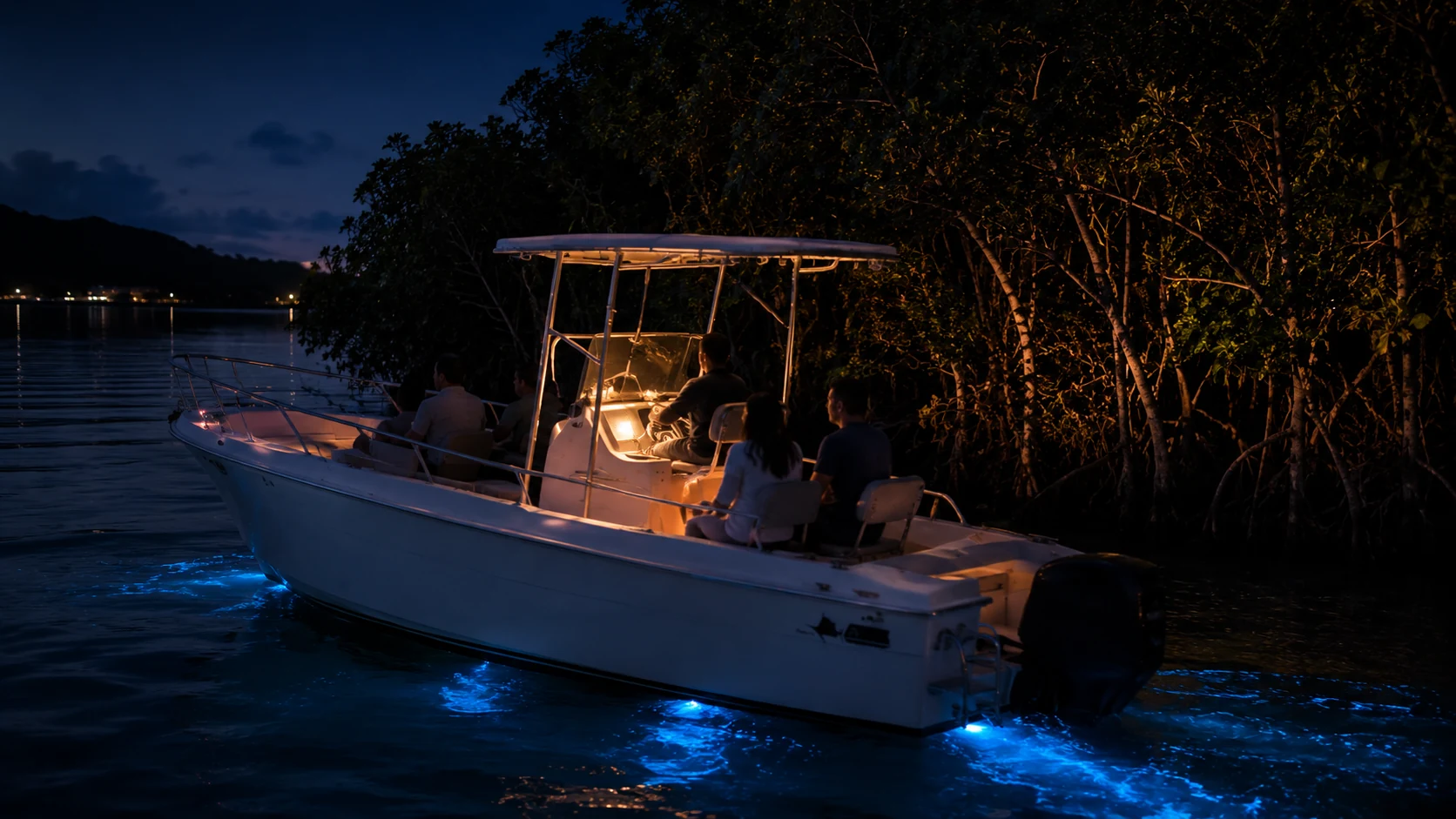
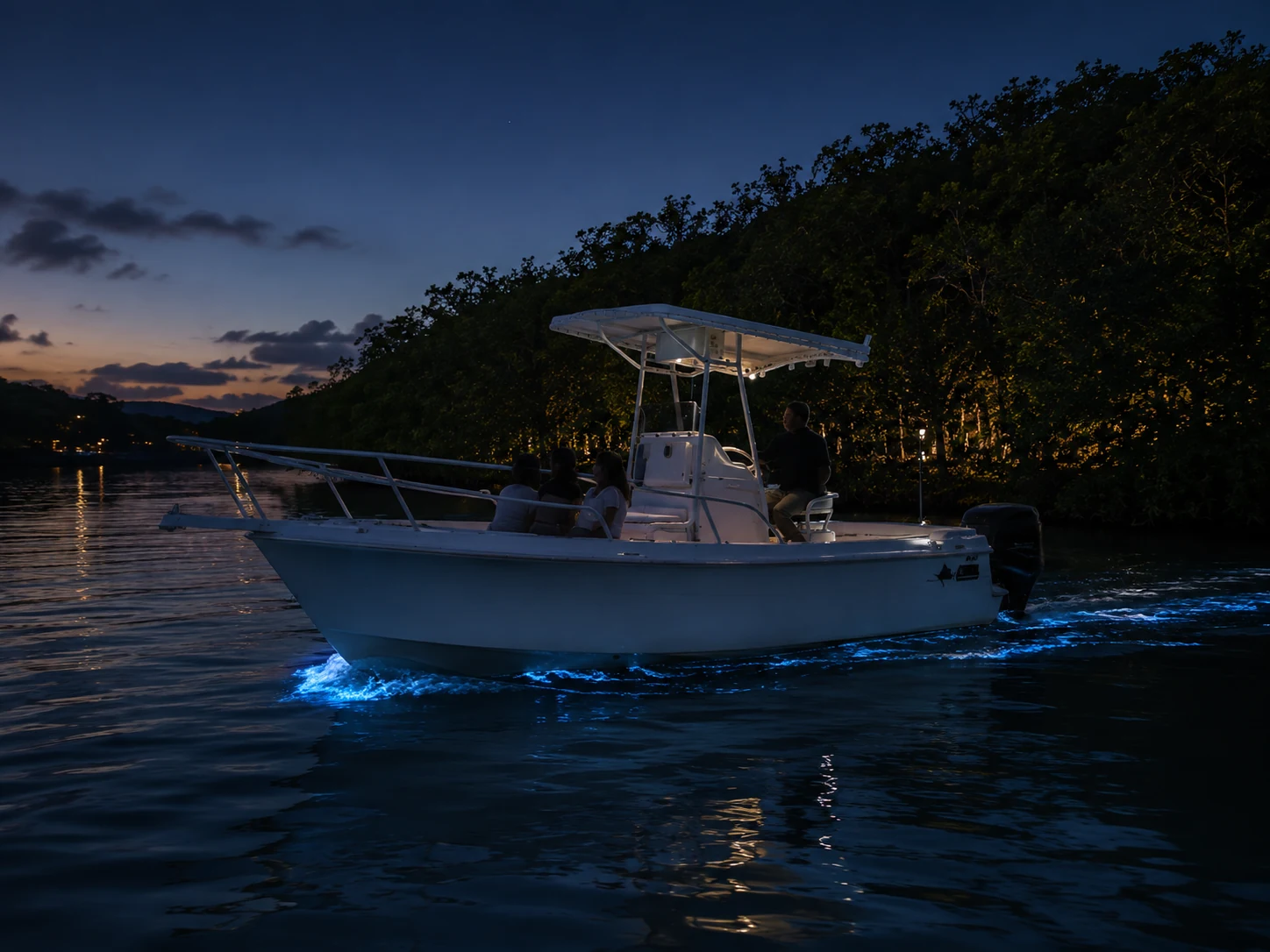
Boat moving beside a dark mangrove shoreline in La Parguera
Mangroves sit directly at the land-water boundary. Their roots and dense structure help stabilize that edge.

Coastal protection

Roots slow water and help hold the shoreline together.

NOAA explains that mangrove root systems slow tidal water, trap sediment, and reduce erosion from currents, waves, and storm surge. USGS specifically notes that La Parguera’s mangroves help protect the coast during storms.

That does not make them an impenetrable hurricane wall. It means a healthy mangrove shoreline can absorb and dissipate some energy that would otherwise hit an exposed coast directly.

Fish habitat

The roots are a nursery, hiding place, and feeding zone.

01

Juvenile shelter

Complex submerged roots give smaller fish and crustaceans places to hide from predators.

02

Food web

Roots and surrounding habitat support algae, invertebrates, and other organisms that become food for larger species.

03

Fishing connection

Healthy nursery habitat helps support the broader fish communities that move between mangroves, seagrass, and reefs.

Water quality

Mangroves slow the water enough for sediment to settle.

NOAA describes mangroves as helping trap sediments and filter runoff. By slowing currents, fine material can settle instead of being carried as easily into surrounding waters.

That matters in a place like La Parguera because the reserve is not one isolated habitat. Water moves between shallow mangrove areas, seagrass beds, and reefs. What happens along the shoreline can influence the habitats farther offshore.

Calm La Parguera water near shoreline habitat at twilight
One connected coastal system. The value of mangroves makes more sense when you look beyond the trees and see how the habitats interact.

Habitat connectivity

Mangroves, seagrass, and reefs function better as a network.

Mangroves

Shoreline structure, nursery habitat, sediment trapping, and storm buffering.

Seagrass

Food, shelter, sediment stabilization, and nursery habitat for fish and invertebrates.

Coral reefs

Complex offshore habitat supporting diverse fish communities and recreation.

Bio Bay

A specialized waterbody where high concentrations of bioluminescent organisms can become visible at night.

Responsible visiting

The best tourism model is one that still works years from now.

  • Follow Captain Luis’s navigation and safety instructions around shallow habitat.
  • Do not grab mangrove roots, wildlife, corals, or seagrass.
  • Keep trash and loose items secured on the boat.
  • Use the Bio Bay and mangrove areas as something to observe—not a backdrop to physically alter for a photo.

Common questions

Quick answers before you plan.

These answers are meant to set realistic expectations and help you choose the right experience.

Why are mangroves important in La Parguera?

Mangroves stabilize shorelines, reduce wave energy, trap sediments, support water quality, and provide nursery and shelter habitat for fish and other marine life.

Do mangroves cause the Bio Bay to glow?

Not by themselves. The glow comes from bioluminescent dinoflagellates. Mangroves are part of the larger coastal ecosystem around La Parguera, but it would be misleading to say mangroves alone create the bioluminescence.

Do fish use La Parguera mangroves?

Yes. NOAA and Puerto Rico ecosystem research describe mangrove, seagrass, and reef habitats in La Parguera as connected habitats used by many fish species, including juveniles.

Do mangroves protect the coast from storms?

Yes. NOAA and USGS describe mangroves as shoreline-stabilizing habitat that can reduce erosion and buffer wave and storm energy.

How can visitors protect mangroves?

Follow marked navigation and operator guidance, avoid damaging roots or wildlife, do not leave trash, minimize unnecessary disturbance, and respect protected-area rules.

Sources

Sources & further reading

This page is based on current Puerto Rico tourism guidance, NOAA science, Puerto Rico environmental information, and the services actually offered by Captain Luis. Natural conditions can change, so no page should be treated as a brightness or weather guarantee.

Plan your La Parguera experience

Experience the ecosystem instead of just reading about it.

Explore La Parguera with a local captain who works these waters across both fishing and Bio Bay trips.

Find my experience